What Is AI Engine Optimization & Why SEO Isn’t Enough
Discover what AI Engine Optimization (AIEO) is, how AI SEO works, and why traditional SEO alone can’t keep up with AI-driven search engines.
What You'll Learn
- Why 40% of searches now end without a click
- How AI reads content differently from traditional search engines
- A 4-week roadmap to implement AIEO without overwhelming your team
Google's AI now answers questions directly on the search page. No click required.
If someone searches "best running shoes for flat feet," they get a complete answer right there—brands, features, price ranges. Your carefully optimized article sits buried below, unread.
The hard truth: Ranking #1 doesn't guarantee traffic anymore.
The Old Rules Are Breaking Down
For twenty years, the game was simple: master keywords, build backlinks, fix technical issues. Climb the rankings, win the traffic. Search engines are no longer just matching keywords. They are interpreting meaning, context, and user intent using artificial intelligence. This shift has given rise to a new discipline called AI Engine Optimization (AIEO)—and it’s redefining how brands win visibility online.
The introduction of artificial intelligence SEO—specifically, generative AI in search results like Google’s Search Generative Experience (SGE) and Bing Chat—means that ranking #1 on a list of blue links is no longer the ultimate prize. We are moving from optimizing for search engines to optimizing for answer engines.
Welcome to the era of AI Engine Optimization.
The Shift: From Finding Links to Generating Answers
To understand AIEO, you must first understand how search behavior is changing.
Then: User types "best running shoes for flat feet" → Google shows 10 blue links → User clicks, reads, compares across tabs.
Now: User types the same query → AI reads those pages, understands them, synthesizes one comprehensive answer → User gets what they need without clicking.
If an AI can answer the user's question directly on the results page without them ever visiting your site, traditional SEO has failed to capture that value.
What Is AI Engine Optimization (AIEO)?
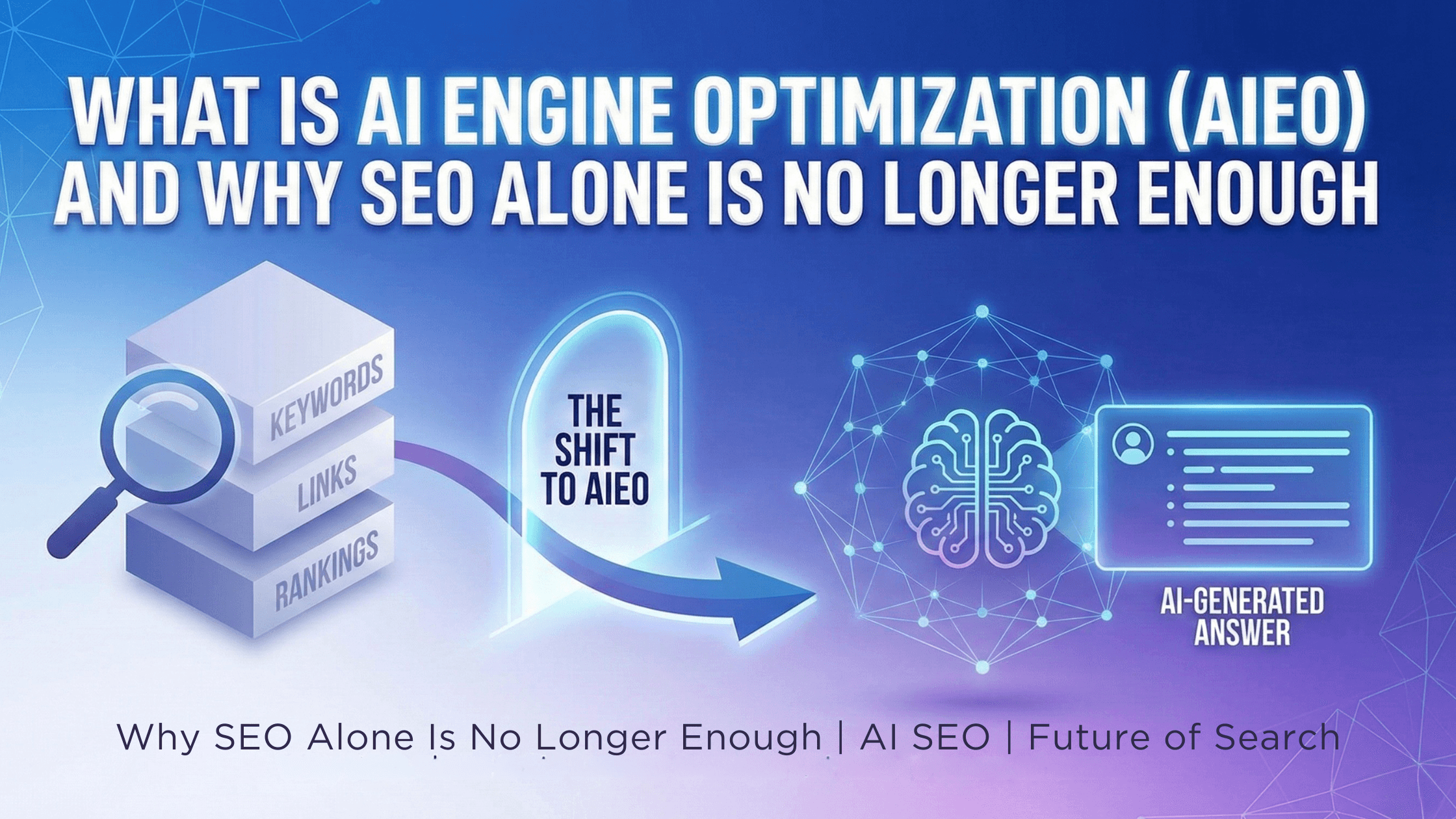
AI Engine Optimization (AIEO) is the process of optimizing digital content for AI-driven search systems that rely on machine learning, natural language processing, and predictive algorithms.
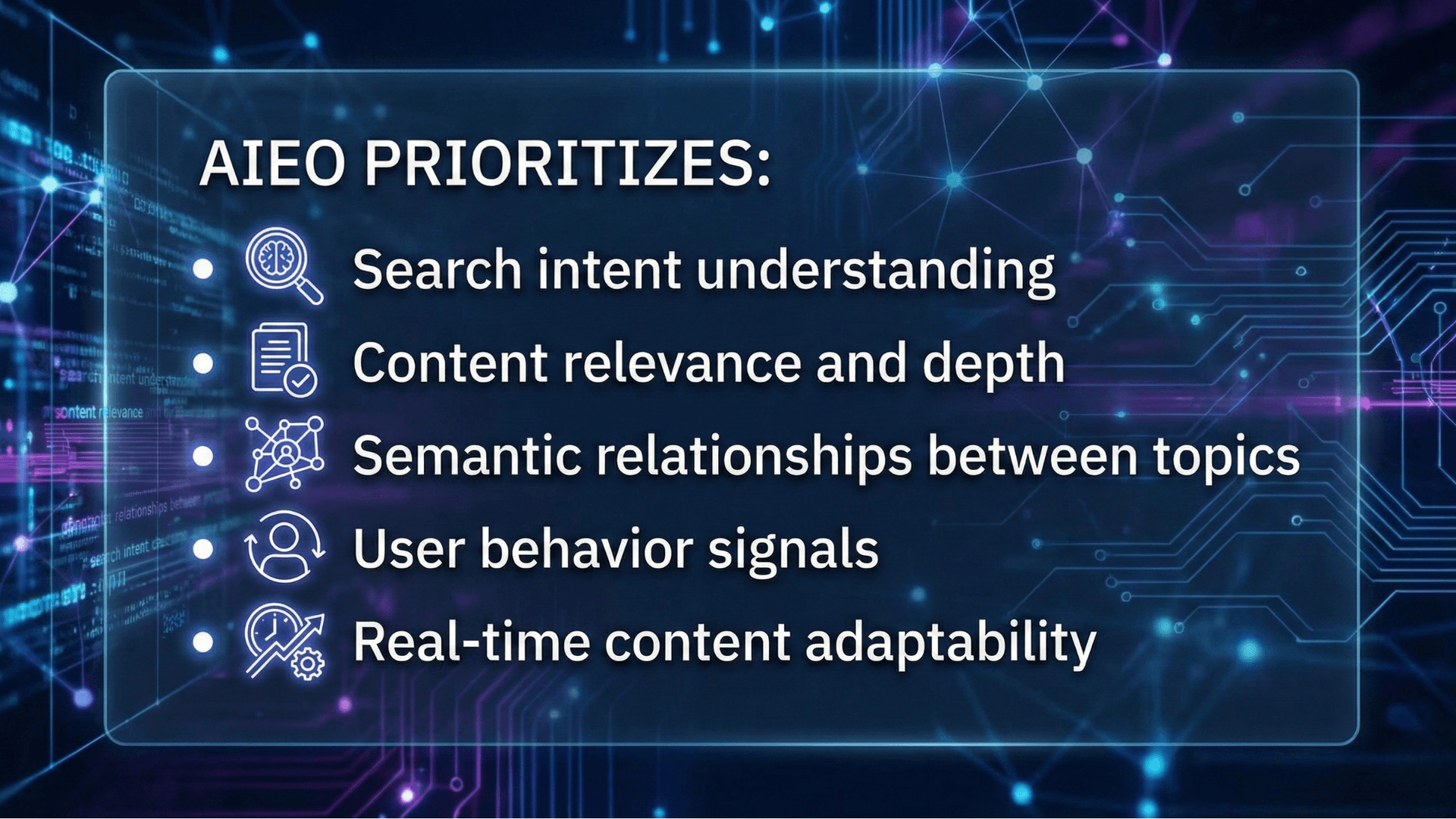
Unlike traditional SEO, which focuses on Keyword placement, Backlink quantity, and page speed, AIEO prioritizes:
- Search intent understanding
- Content relevance and depth
- Semantic relationships between topics
- User behavior signals
- Real-time content adaptability
In short, AIEO optimizes for how AI understands content, not just how search engines crawl it.
AI SEO vs Traditional SEO: What Has Changed?
Traditional SEO worked well when search engines were rule-based. Today, platforms like Google use AI systems such as RankBrain, BERT, and MUM to understand content like humans.
Here’s how AI SEO changes the game:
| Traditional SEO | AI-Powered SEO (AIEO) |
| Match keywords exactly | Understand user intent |
| Static rankings | Dynamic, personalized results |
| Manual optimization | AI automation and insights |
| Heavy on backlinks | Quality + relevance signals |
SEO isn't dead. It just got smarter.
Why SEO Alone Is No Longer Enough
1. The Zero-Click Problem
According to recent search behavior analyses, 40% of Google searches end without a click—and that number continues climbing as AI search features expand. AI generates comprehensive answers right on the results page.
Your #1 ranking becomes invisible when an AI answer box sits above it.
2. AI Reads Structure, Not Just Keywords
Old SEO: Repeat "flat feet" 10 times in your article.
New AIEO: Cover arch support types, material science, pronation patterns, and brand comparisons. AI wants comprehensive topical coverage, not keyword stuffing.
3. You Can't Fake Authority
AI models prioritize sources with high Experience, Expertise, Authoritativeness, and Trustworthiness (E-E-A-T).
Traditional SEO tricks can game rankings temporarily. They can't fake the deep expertise AI systems require.
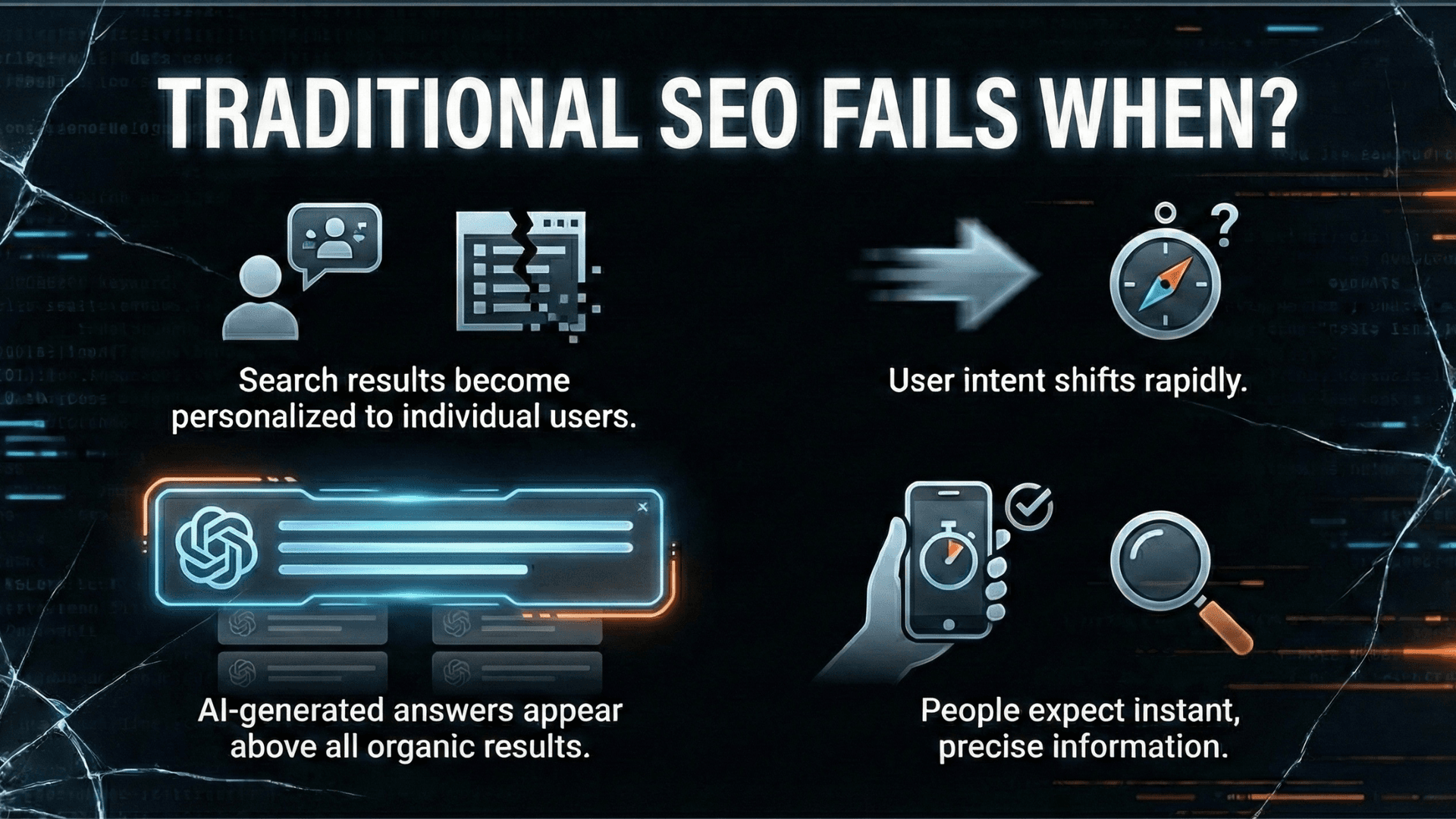
Traditional SEO fails when:
- Search results become personalized to individual users
- User intent shifts rapidly
- AI-generated answers appear above all organic results
- People expect instant, precise information
How AI and SEO Work Together
AI is not replacing SEO—it’s transforming it.
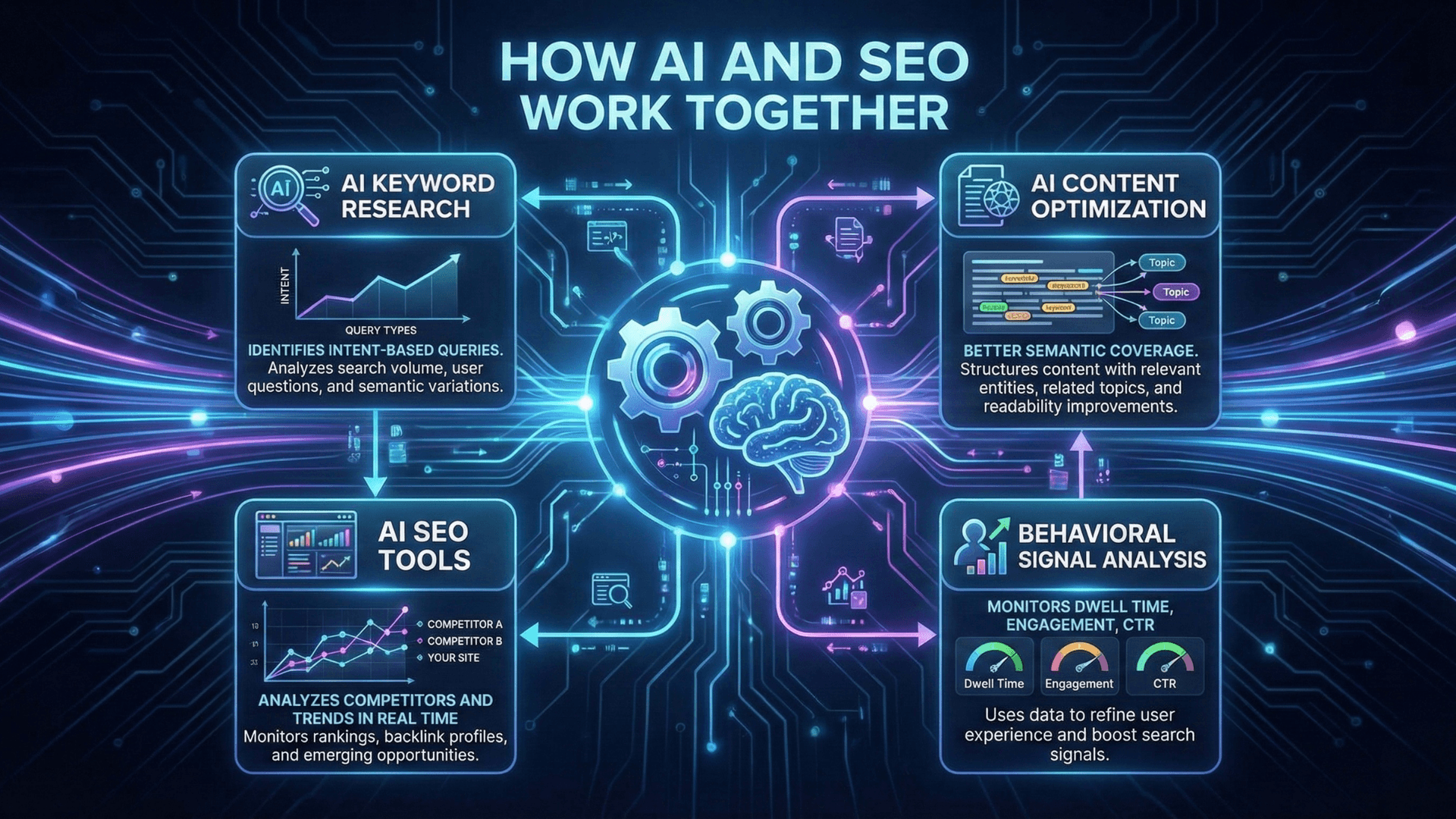
AI and SEO now work hand in hand through:
- AI keyword research that identifies intent-based queries
- AI content optimization for better semantic coverage
- AI SEO tools that analyze competitors and trends in real time
- Behavioral signal analysis (dwell time, engagement, CTR)
This integration allows marketers to make smarter decisions faster.
Key Components of AI Engine Optimization
1. AI Content Optimization
AI evaluates your structure, readability, and topical depth. Thin content gets detected and downgraded instantly.
Example: Writing about "coffee" means covering roasting processes, bean origins, brewing methods, and grind sizes—not just repeating "coffee" throughout.
2. AI Keyword Research
Stop chasing search volume alone. Focus on intent, question patterns, and long-tail semantic variations.
What people search: "running shoes" What they actually want: "running shoes that won't hurt my arches on concrete."
AI understands the difference.
3. AI SEO Automation
Modern tools handle:
- Technical audits
- Content gap analysis
- Competitor tracking
- Real-time ranking predictions
This reduces manual work and increases precision.
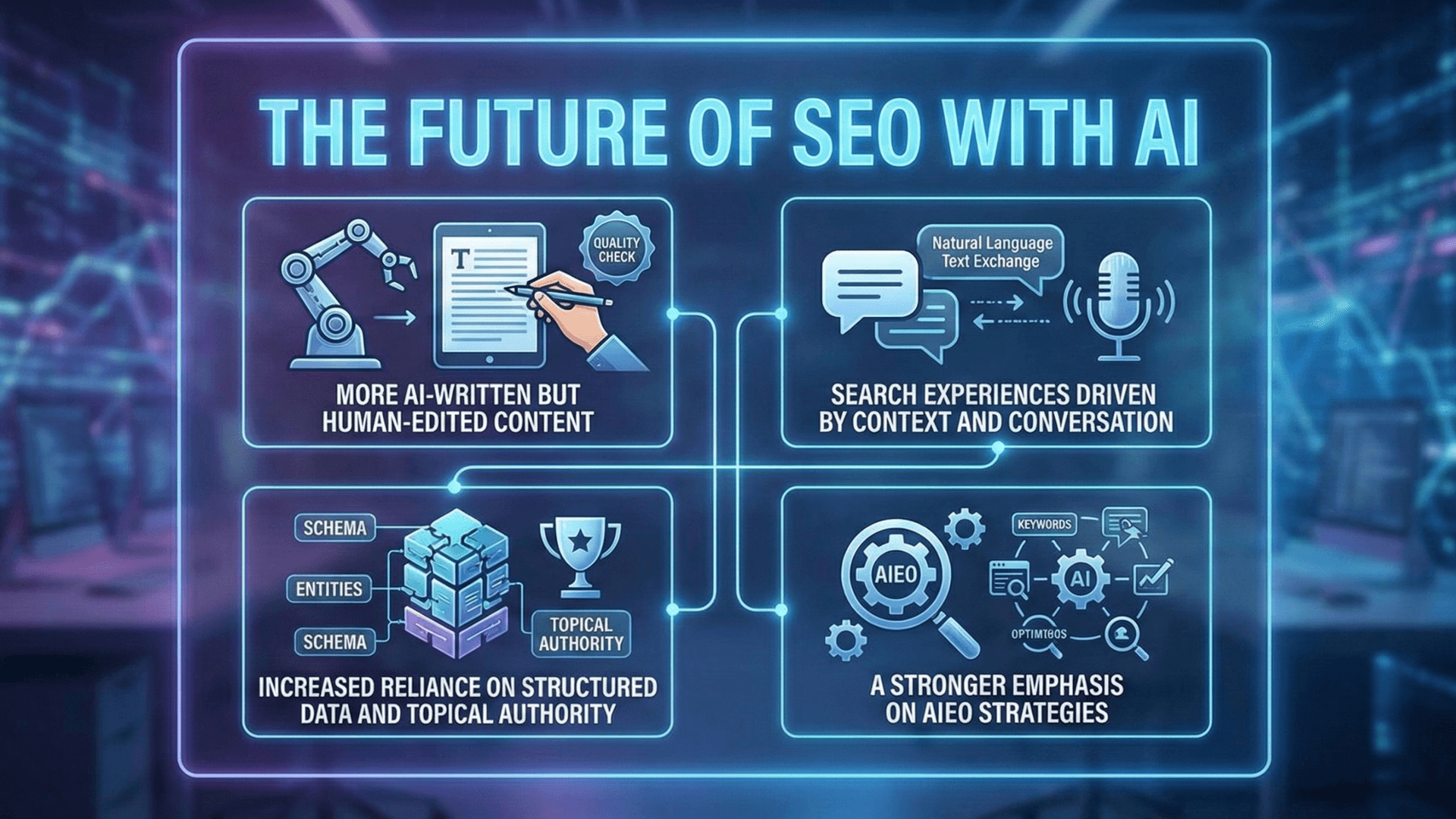
The Future of SEO With AI
The future of SEO with AI is adaptive, data-driven, and deeply user-focused.
Structured Data Becomes Critical
Want AI to understand your content? Speak its language.
Schema markup tells AI exactly what your content contains: "This is a recipe," "This is a price," "This is an FAQ answer."
Without structured data, AI might misinterpret or skip your content entirely.
Entity-Based Optimization Wins
Move beyond keyword matching. Build comprehensive entity coverage.
When writing about "electric cars," discuss Tesla, battery technology, charging infrastructure, range anxiety, and environmental impact. Show the AI you have genuine topical authority.
Answer Optimization Becomes Standard
Anticipate exact questions and provide concise, factual answers immediately.
The easier you make it for AI to extract a direct answer, the more likely it is to cite you.
Start Optimizing for AI Today
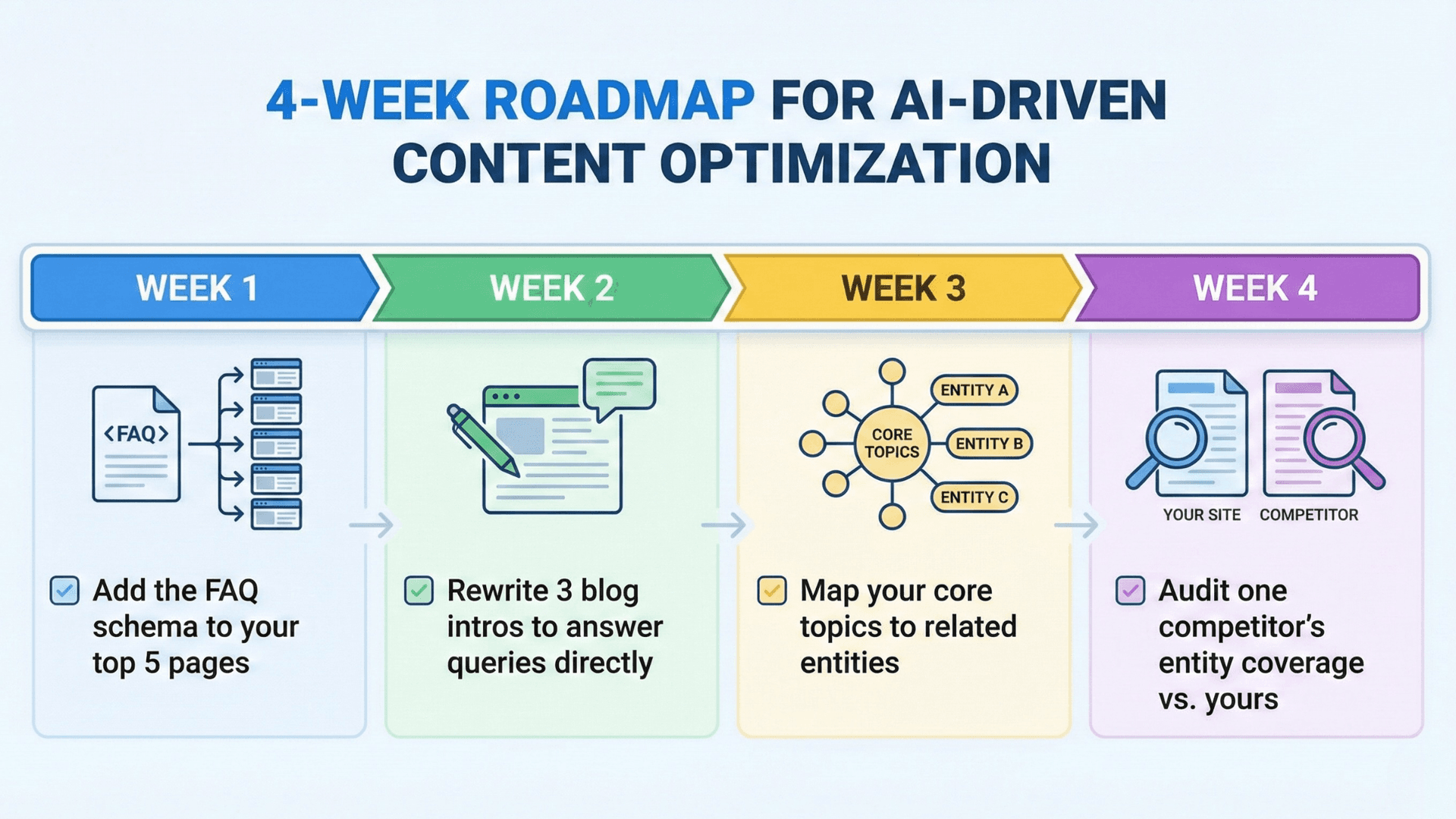
You don't need to overhaul everything at once. Here's a practical 4-week roadmap:
Week 1: Add the FAQ schema to your top 5 pages
Week 2: Rewrite 3 blog intros to answer queries directly
Week 3: Map your core topics to related entities
Week 4: Audit one competitor's entity coverage vs. yours
Final Thoughts: AIEO Is the New Competitive Advantage
The integration of artificial intelligence seo into mainstream search is not a fad; it’s the new reality.
The goal remains the same: connect your content with people looking for it. But the middleman changed. That middleman is now a machine that needs structured, authoritative data.
Rankings still matter. But being the source, AI trusts and cites matters more.
This is exactly the gap AIEO-focused strategies are designed to solve—helping brands move from chasing clicks to becoming trusted answers inside AI-driven search experiences.
At Cronboost, we help businesses implement AI-driven SEO strategies that go beyond rankings—focusing on visibility, intent, and long-term growth.
Blueprint, our free scoping tool
Find out what to build next, in about two minutes
Answer a few questions about where your business is today, and Blueprint drafts a recommendation for you: what to build, what to automate, and what a first phase usually costs. It is free, and you can read the result without giving us an email address.